International Weight Bearing CT Study Group in New Orleans

new-orleans-344633_1920

Foot & ankle surgeons are invited to the Scientific Session on Weight Bearing CT from 5:45 AM to 7:00 AM, on March 10, 2018, prior to the events of AOFAS Specialty Day. The session, presented by the WBCT International Study Group (WBCT ISG), will be moderated by Dr. Cesar de Cesar Netto in the Marriott New Orleans Downtown Convention Center’s second floor Fulton Room (directly across from the  Ernest N. Morial Convention Center)

A full, hot breakfast will be provided to all attendees.

Dr. Alex Barg from the University of Utah will present an overview of current literature on weight bearing CT imaging.

Dr. Martin O’Malley of the Hospital for Special Surgery will follow with a discussion titled Weight Bearing CT of the Foot and Ankle in Treatment of Professional Athletes.

Dr. Mark Easley from Duke Orthopedics will then present a talk titled WB CT vs Standard CT for the Fppt and Ankle: The Devil is in the Detais.

The presentations will close with a lecture on correlating weight bearing CT with pedography, offered by Dr. Martinus Richter of Krankenhaus Rummelsberg.

The International WBCT Study Group is comprised of active and passive members from relevant international surgical and radiology foot and ankle societies. The goals of the group include standardizing methodology of measurement practices, offering a platform of communication in the foot and ankle specialties, and creating guidelines and reviews regarding WBCT use at the international level. Research projects are conducted and published collaboratively. While the group functions independently from the industry, it works cooperatively with the different manufacturers of different WBCT devices.

CurveBeam is a proud sponsor of the WBCT ISG.

A primary goal of CurveBeam is provide cutting-edge Cone Beam CT capabilities to foot and ankle specialists at a fraction of the price of traditional CT equipment.

Register here for the Study Group session. If you’d like to learn more about CurveBeam’s Cone Beam CT technology, visit our website today.

CurveBeam Sponsors The OrthoForum’s Annual Meeting

TheOrthoForum_logo_NEW2017-1

CurveBeam is proud to be a returning sponsor of The OrthoForum’s Annual Meeting February 15-17, 2018 at The Ritz-Carlton in Orlando, Florida. The event will bring together orthopedic practices from all over the United States.

This year’s agenda will focus on practical ways new physician owners can become productive board and committee members and will include instruction on the factors and skills needed to successfully contribute to effective practice management. Highlights of the event include a presentation from keynote speaker Andrew Hayek, the CEO of Surgical Care Affiliates and Optum Health, focusing on the delivery of orthopedic care in a value based payment environment.

Ross Bernstein, a nationally known business speaker, will present information on developing peak performers based on his extensive research with professional athletes, and OrthoForum will showcase new initiatives that are creating practice management support programs for compliance and physician recruiting.

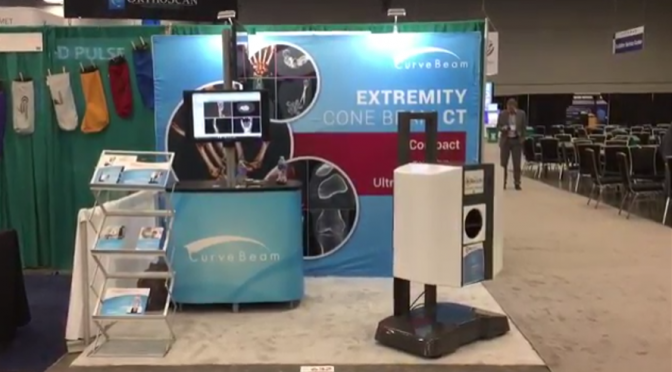
CurveBeam will have information about its imaging solutions on display.

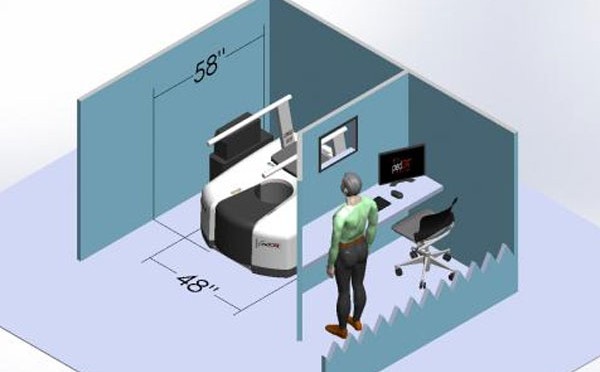
The pedCAT system was created with orthopedic and podiatric clinics in mind, and is a compact, ultra-low dose CT imaging system. Since the device was designed for busy practices, the pedCAT can scan in less than one minute. The system is also self-shielded and has a compact footprint of about 4’ x 5’. The pedCAT has the largest field of view available in orthopedic CBCT imaging, which permits true weight-bearing positioning.

The InReach system can perform hand, wrist, forearm, elbow and lower extremity scanning in less than 20 seconds. The InReach is the most compact system on the market, with a footprint of about 2’ x 3’. The system is self-shielded and is also PACS/DICOM compatible, just like the PedCAT.

We at CurveBeam are very excited to attend this event this year as a Sponsor, and we look forward to meeting Ortho practices from all over the country. For more information on the event, you can visit the event website, or email questions directly to Lauren Chastain at lchastain@theorthoforum.com.


See you soon!

CurveBeam Shares Some Key Takeaways from the 2017 RSNA Annual Meeting

chicago-1804479_1920

CurveBeam recently had the pleasure of attending and participating in the 103rd Annual Meeting of the Radiological Society of North America (RSNA), held in Chicago from November 26 to December 1. The RSNA Annual Meeting is a unique opportunity for attendees from around the world to gather and meet with thought leaders and innovators to learn about the latest advances in imaging. Post-event, we wanted to share our experiences including some key takeaways.

Rising Injuries in Youth Sports
Diego Jaramillo, MD, MPH, from Miami Children’s Hospital in Miami, delivered a presentation titled “The Perfect Storm for Athletic Injuries: Youth, Growth, and Hormones”. Dr. Jaramillo shared how childhood sports have become increasingly intense and competitive. As young athletes dedicate more time and energy to one specific sport and even specialize in specific functions within that sport, the type of injuries, particularly repetitive injuries, are intensifying. Increased bone porosity of a young skeleton coupled with an increase in muscle strength can stress a skeleton and predispose it to damage. Puberty, including the hormonal influences on the growth plate, also increases the vulnerability of the skeleton to injury. Following x-rays, most young athletes are diagnosed using CT, especially for injuries that involve the head or that are primarily osseous such as the triplane fracture.

Effect of Weight Loss on Knee Cartilage Degeneration
Alexandra S. Gersing, MD, from the University of California, San Francisco, shared the results of a study on “How Weight is Lost Can Slow Knee Cartilage Degeneration”. The study examined which types of weight loss are most beneficial for patients who need to lose a significant amount of weight to slow the progression of knee cartilage degeneration. The study looked at 760 male and female patients with a body mass index greater than 25 who were enrolled in the Osteoarthritis Initiative (OAI), a U.S.-based study focused on the prevention and treatment of knee osteoarthritis. Patients were categorized into groups according to the amount of weight they were asked to lose over a 48-month period, as well as the weight loss method. Changes in the right knee were assessed at baseline, 48-, and 96-months using 3T MRI. Patients who lost weight showed significantly less T2-value increase in the bone layer of all compartments compared to those with stable weight, suggesting less cartilage degeneration over 96 months.

Patients Prefer Immediate Test Results
Radiology resident David Mihal, MD, of the University of Cincinnati College of Medicine and the Cincinnati Children’s Hospital (CCH), shared a “Survey that Showed Patients Prefer to Get Immediate Test Results”. Dr. Mihal began the four-phase study after learning that 20 percent of patients were uncertain about how they were going to get their results and had expressed anxiety to the technologist doing the exam. In phase one, techs screened outpatients to identify those who were nervous about their results. In phase two, the front desk staff checked for patients who didn’t have a follow-up appointment and offered them the option of immediate results. In phase three, all radiography outpatients were offered results as part of a questionnaire at check-in after a 10 to 20 minute wait. In phase four, the wait-time notification was eliminated from the questionnaire. Each successive phase tripled the rate at which patients used the service. Perhaps more important, 97 percent of patients understood that immediate results were available, and 92 percent of patient comments on the availability of the service were positive.

CurveBeam designs and manufactures Cone Beam CT imaging equipment specifically designed for the orthopedic and podiatric specialties, including the pedCAT, a compact, ultra-low dose CT imaging system. This technology allows doctors to make a better diagnosis the first time, eliminating the need for additional scans and, therefore, reducing low-level radiology exposure to patients. Best of all, the practice has access to the results right away. CurveBeam is proud to have participated in the 2017 RSNA Annual Meeting and is looking forward to RSNA 2018!

To learn more, visit CurveBeam.com today.

Webinar: Clinical Insights from Dr. Cesar de Cesar Netto

curvebeam webinar

Current research in orthopedics and podiatry have revealed many advantages of weight-bearing CT procedures over traditional ones.

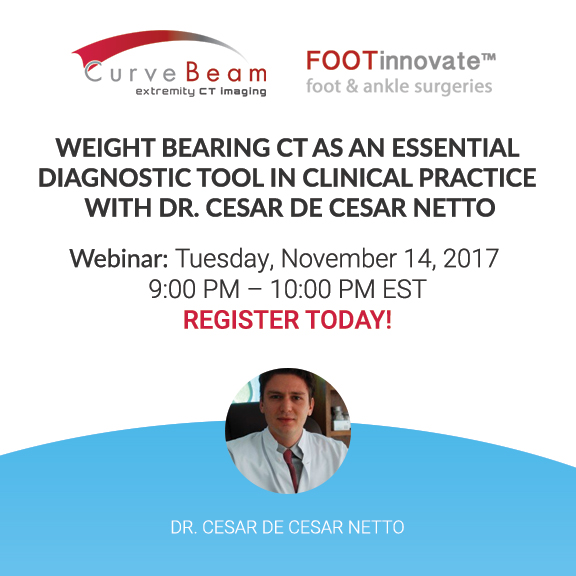
To offer greater insight into Weight Bearing CT benefits, Dr. Cesar de Cesar Netto, of the Hospital for Special Surgery, is offering a lecture via Webcast on Tuesday, November 14. His lecture is titled, “Weight Bearing CT as an Essential Diagnostic Tool in Clinical Practice.”

Dr. Netto explained, “I will be demonstrating cases that would not normally be indicated for a medical CT exam. I will review how those cases presented on X-Ray, and then compare those to weight bearing CT scans of the same patient. I will show how weight bearing CT can often illuminate a pathology or deformity in ways that radiograph can often miss altogether.”

Prior to 2012, doctors and patients had fewer choices for imaging. X-rays can obscure bony detail, and non-weight bearing CTs lack accuracy with regard to join space and alignment. Today’s weight bearing CT scans improve upon the weaknesses of prior imaging options, and can result in a higher level of care for orthopedic and podiatry patients.

To register for this lecture, click here. To watch more webinars, click here.

Weight Bearing CT International Study Group Presenters Share Important Findings

The American Academy of Orthopaedic Surgeons (AAOS) held its annual meeting at the San Diego Convention Center from March 14-18, 2017. The Weight Bearing CT International Study Group Meeting on March 18 was an important part of this event. The group promotes dialogue and collaboration on weight bearing CT research initiatives, and is working to create standardized protocols for measurement and analysis.

At the meeting, three presenters shared their findings:

“Using Weight Bearing CT to Understand the Adult Acquired Flatfoot,” Scott Ellis, MD, Hospital for Special Surgery

Dr. Ellis presented three studies that considered the role of weight-bearing CT in Adult Acquired Flatfoot (AAFD). Researchers sought to understand the nature of pain in AAFD, and to determine the cause of and the nature of deformity for AAFD.

The first project assessed the cohort of Stage II patients with lateral hindfoot pain compared to control patients with just medial pain. The study found that subtalar arthrosis was significantly more common in the group with hindfoot pain. Arthrosis is typically undetected on a plain radiograph, but is obvious on a 3D weight-bearing CT scan. The researchers found an important role for weight bearing CT in management of AAFD and in determining the many factors contributing to this condition.

A second study by Bruce Sangeorzan used simulated WB to determine the possible etiology of AAFD. Researchers correlated the angles of the coronal subtalar joint position in patients with AAFD versus a control group. They found that AAFD patients exhibited significantly more valgua in the angle than in the control patients and that the inftal-suptal correlated with a number of measurements related to flatfoot.

A third study at the Hospital for Special Surgery compared peritalar subluxation between AAFD patients and controls using weight-bearing multiplanar imaging. The study found that weight-bearing CT better identified the source of pain in AAFD, and showed where the deformity occurs with respect to talus. According to the study’s results, weight-bearing CT overcomes the limitations of both standard CT and plain radiography.

“Weight-bearing CT of the Foot & Ankle: Literature Review and Indications for Use in the Clinic,” Alexej Barg, MD, University of Utah, Department of Orthopaedics

This study examined different imaging modalities, including conventional radiographs, CT-Arthography, weight-bearing CT, MRI, and ultrasonography. Researchers found that a weight-bearing CT scan offers a tremendous amount of additional information over conventional methods, allows rapid evaluation of complex foot and ankle anatomy with thin-section imaging, improves diagnostic accuracy compared to radiographs, and helps minimize the radiation dose to the patient. An additional benefit is that a cone beam CT scanner is relatively small and requires less capitalization cost than a conventional CT unit.

Dr. Barg also offered a comprehensive literature review of relevant weight-bearing CT studies. He concluded his presentation by sharing cases of weight-bearing CT scanning in clinical use. He found the weight-bearing CT scan is a significant improvement over conventional X-rays, especially in the ability to compare results of different tests and patients through standardized measurements with reliable identifications of anatomic landmarks.

“Rotation of the First Metatarsal in Hallux Valgus Deformity,” Phinit Phisitkul, MD, Department of Orthopaedic Surgery and Rehabilitation, University of Iowa Hospitals and Clinics

Hallux valgus is a complex triplane deformity that may result from intrinsic factors, such as genetics or anatomy, as well as extrinsic factors, such as wearing high heels with a narrow box toe. Previous studies generally did not rely on weight-bearing CT scans. This study reviewed 85 patients who underwent weight-bearing CT using the CurveBeam pedCAT between January 2014 and May 2016.

The study concluded that weight-bearing CT of the foot is helpful in preoperative planning for complex hallux valgus deformities. Researchers also found that pronation of the first metatarsal is more highly correlated with foot structure, for example pes planus, than hallux valgus deformity.

CurveBeam is an innovator setting the standard of care in orthopedic imaging. CurveBeam’s automatic measurement tools lead to better patient outcomes, streamlined practice workflow, and increased revenue. Check out a replay of the 2017 Weight Bearing CT International Study Group Meeting at https://www.youtube.com/watch?v=LHIAF-ExOsY&t=11s .


CurveBeam’s pedCAT Imaging System Exhibited at CIRMS Annual Meeting

The Council on Ionizing Radiation Measurements and Standards (CIRMS) 25th Annual Meeting in Gaithersburg, MD will showcase new cutting edge technologies touching on the fundamental aspects of radiation measurements and focusing on the theme of ‘Past, Present, and Future’. The dynamic and diverse aspects of the importance of measurements and standards in this area will be addressed by international experts from academia, industry, and government. These experts will examine radiation protection, industrial applications and radiation effects, medical applications, homeland security, and other related areas.

CurveBeam is pleased to announce we will be participating. A CurveBeam engineer will be presenting on Tuesday, March 28 during “Breakout Session III: Real Time Imaging for Orthopedic Applications.” Her talk is titled “Why Cone Beam CT Can Make 3D the Standard of Care in Extremity Imaging.” With Cone Beam CT imaging, CurveBeam is revolutionizing the way specialists diagnose and create comprehensive treatment plans for podiatric and orthopedic issues.

The core team behind CurveBeam pioneered Cone Beam CT imaging technology for the dental specialties. The introduction of point-of-care Cone Beam CT imaging revolutionized the industry and ushered in the advent of custom dental implants and improved practices in orthodontics and oral surgery. Today, Cone Beam CT scans are virtually the standard of care for advanced oral surgery treatment planning. In the same way, CurveBeam hopes to contribute to the improvement of the orthopedic and podiatric specialties worldwide through their new product pedCAT.

One of the goals of the CIRMS Annual Meeting is to get input from audience participants on the need for developing a 3D real-time imaging tool for evaluating orthotics inside shoes with the patient in a weight bearing position. Once the orthotic has been made, an image of the patient can be taken in the weight bearing position, with the patient standing in his/her shoes with the new orthotic installed in the shoe. This type of analysis could be used to evaluate if the orthotic does what it is meant to do. The 3D weight bearing images can provide information about specific bone alignment issues using the new orthotics. The images can also reveal if the new orthotic is providing the expected amount of correction without compromising other foot anatomical issues, and if the spacing between the major foot joints is affected by the new orthotic.

CurveBeams’s pedCAT system allows specialists a unique bilateral, weight bearing 3-dimensional view of the foot and ankle to fully diagnose and create comprehensive treatment plans. The pedCAT is a compact, ultra-low dose CT imaging system ideal for orthopedic and podiatric clinics. Patients benefit from the convenience of point-of-care advanced diagnostic imaging. Scan time is one minute, and the pedCAT automatically generates all standard X-Ray views in addition to the full CT volume. Depending on the scan protocol, the patient is exposed to 2 – 5 micro Sieverts per scan. That’s about the same as a plain X-Ray study of the foot and ankle, and less than the average daily background radiation a U.S. resident is exposed to.
.
To learn more about the CurveBeam pedCAT Imaging System and how it is revolutionizing the orthopedic and podiatric fields, visit curvebeam.com, or talk with our team at the CIRMS 25th Annual Meeting, March 27th to March 29th in Gaithersburg.

Preview: Curvebeam at AAHS

In September 2016, we showcased InReach at the ASSH Conference! Take a look above!

Happy New Year from CurveBeam, we’re kicking off 2017 with a bang! This week in Waikoloa, HI, we are showcasing some incredible tech at the American Association for Hand Surgery Conference.

The AAHS was founded on the premise of bringing hand surgeons and hand therapy professionals from the United States, Canada, and other countries around the world who work to assess and manage a variety of common and complex conditions related to the hand and upper limb together to provide an educational forum to expand the professional expertise.

Here are the top reasons our Booth is a can’t miss!

    1. Experience CubeVue

CubeVue is a custom visualization software that can transform your diagnosis ability with 3D technology. It automatically generates all standard X-Ray views, eliminating the need for your plain X-Ray system altogether. Receive a demo at our booth!

      1. Learn how to better practice workflow

It is important to understand how point-of-care advanced diagnostic imaging can benefit your practice workflow. Learn how our imaging solutions can help you!

        1. Receive information about InReach

InReach is a point-of-care extremity CT imaging device that you saw in the video at the beginning of this article! The InReach is an extremity cone beam CT scanner that images the hand, wrist, forearm, elbow and the lower extremities that’s comfortable and low impact on your patients. It’s also FDA 510(K) Pending.

We are proud to surround ourselves with the top of the line medical professionals in the field of hand and upper extremities. Your dedication and hard work in the field is the reason we do what we do, and we are honored to be a part of a community that advances in leaps and bounds each year.

If you’re at the conference this week, don’t be shy, we’d love to meet you!

Curvebeam’s Booth Is a Must-See at RSNA 2016!

In just a little over a week, many of the greatest minds and innovators in radiology will convene in Chicago for RSNA 2016, and we at CurveBeam are proud to have our talented and skilled team there representing us. Over the course of the conference, there will be groundbreaking research presented, technological advances displayed and educational classes offered. In the heart of it all, our booth will be featuring some incredible innovations – proving once again that CurveBeam is continuing to find new ways to push the boundaries of our field.

Our core team pioneered Cone Beam CT imaging technology for the dental and ENT specialties. The ability to provide point-of-care imaging revolutionized these industries and allowed not only for improved care, but for the possibility of custom dental implants. Now we are taking that same breakthrough technology and adapting it to the orthopedic field, and we are proud to introduce the results of our efforts at this year’s RSNA. Here are our top three reasons why you can’t afford to miss the CurveBeam booth this year:

  1. See the LineUp

We will  unveil the prototype for the LineUP, a bilateral weight-bearing Cone Beam CT imaging system for the knees and lower extremities. It will not only plugs into a standard wall outlet, but will also be self-shielded and will complete a scan in under a minute. While the technology is still investigational only, it is PACS/ DICOM compliant and is sure to revolutionize the way orthopedic clinics approach radiology.


  1. Experience InReach

While the LineUp is certainly fast, the InReach completes scans of the hand wrist, forearm, elbow and extremities in under 20 seconds flat. We designed InReach technology to bring the idea of point-of-care extremity CT imaging  to upper extremity specialists. While it is also still investigational technology, the progress we’ve made toward this goal is worth coming to see.


  1. Discover TALAS

One of the most crucial elements of orthopedic surgical planning is the precise pre-operative measurement of hindfoot realignment. TALAS is a tool that makes the process not only smoother, but more accurate and precise. It is a semi-automated hindfoot alignment measurement device that has been adapted for weight-bearing CT. Come check it out for yourself, and discover the potential TALAS has to one day be a true game-changer in the field.

“We are tremendously excited to share our recent research and development efforts with the global radiology community,” says CurveBeam President and CEO Arun Singh. RSNA is an opportunity to share and learn together as a community and we are thrilled to be a part of that experience. Feel free to come by and discover our innovative new technology. If you want to learn more before seeing our products in person, visit CurveBeam.com. We hope to see you soon at RSNA 2016!

Join The TALAS Revolution in Foot and Ankle Diagnosis

For years, Dr. François Lintz, an orthopedic foot & ankle surgeon at Clinique de l’Union in Toulouse, France, relied on 2D (weight-bearing) X-rays and 3D (non-weightbearing) CT scans in treating patients, some with extraordinarily complicated deformities. Because of the shortcomings of the images, the doctor had to rely on his eyes and hands to calculate alignment measurements. The combination of the rudimentary tools and his expertise allowed him to successfully correct many malformations, although for reasons unknown, a fraction of patients did not experience positive treatment outcomes.

In order to minimize these unsuccessful treatment outcomes, Dr. Lintz searched for more advanced imaging tools and found CurveBeam’s pedCAT. pedCAT provides bilateral, weight bearing 3D CT imaging of the foot and ankle. Dr. Lintz quickly discovered that pedCAT greatly surpassed traditional imaging methods. pedCAT technology proved to be ten times faster than X-Ray and CT studies, reduced the number of patient trips to the hospital, and exposed patients to significantly less radiation.

Dr. Lintz also realized the 3D data generated by pedCAT was far more robust than could be interpreted by available software for making foot alignment measurements. So he embarked on a collaboration with CurveBeam engineers to develop a revolutionary new measurement software – TALAS.

talas_curvebeam1
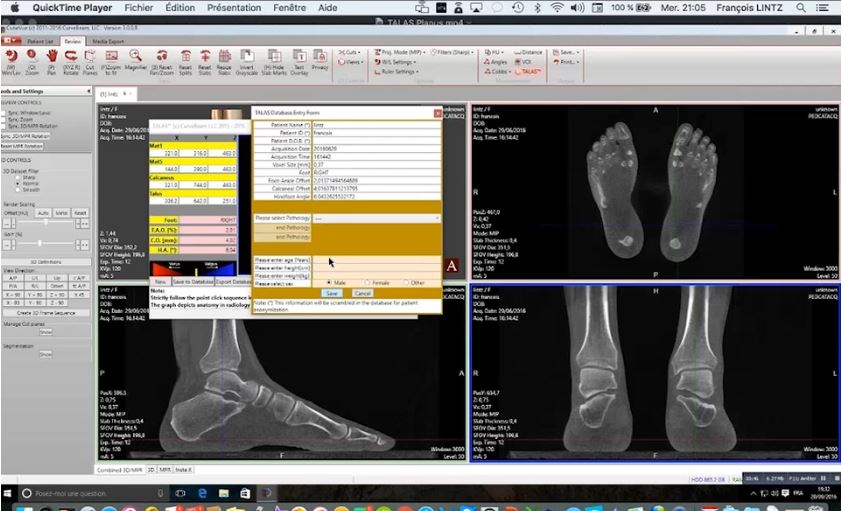
TALAS Software demonstration of 3DWBCT hindfoot alignment measure


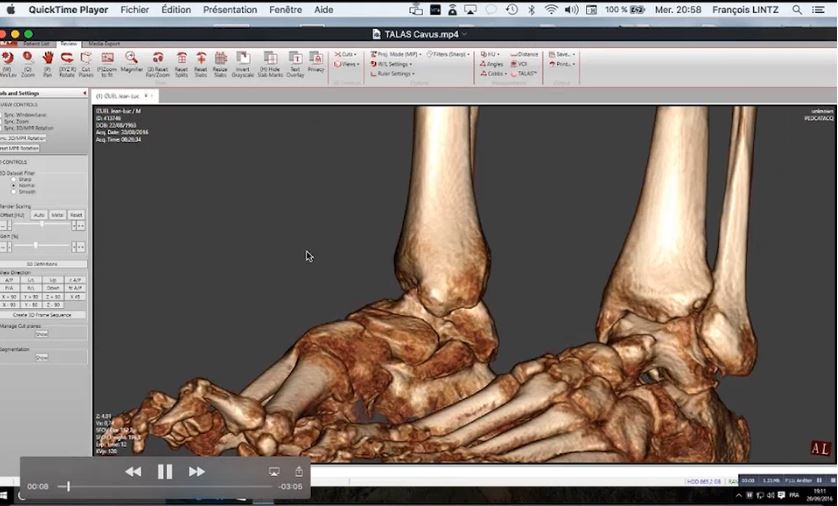
TALAS (Torque Ankle Lever Arm System) is a groundbreaking feature within pedCAT’s visualization application CubeVue. Currently only applicable for hindfoot alignment with forefoot alignment coming soon, TALAS automatically determines foot and ankle offset in a 3D volume. While not approved as a diagnostic tool in humans, TALAS can be used in research for establishing a 3D database of important anatomical landmarks for future diagnostic use. TALAS is patent pending.

Using TALAS to conduct his own research, Dr. Lintz compared the correlations of 3D and 2D biometrics of hindfoot alignment with actual alignment. What he discovered was a 20% greater correlation with actual alignment using pedCAT’s 3D imaging and TALAS feature. pedCAT outperforms radiographs and non-weightbearing CT scans in detecting correct angles, helping to prevent inaccuracies of projection and foot orientation. And TALAS utilizes this wealth of data to provide remarkably precise measurements.

talas_curvebeam2
The innovative features of the TALAS Software

TALAS is the only tool available dedicated to measure hindfoot alignment with a weight bearing 3D dataset. While presently useful for research, Dr. Lintz hopes clinicians around the world will use the software feature to help build a comprehensive database of (anonymized) information, which will allow TALAS to one day serve in diagnosis. Quantifying deformities is the first step to helping medical experts develop treatment plans to correct them. You’re invited to join the data harvesting effort by utilizing TALAS in order to create more positive outcomes for your current, and future, patients.

THE CREAM OF THE CROP

A company is only as good as its team members, and CurveBeam is no exception. Since our founding in 2009, we’ve been fortunate to add some exceptional professionals to our workforce. All of these amazing individuals are essential to our continued success as a leading manufacturer of imaging solutions for the orthopedic and podiatric specialties. Our pedCAT system has become an indispensable health care tool in the United States, Europe and Australia thanks to the dedication of our entire team. Today, we’d like to recognize a certain member of our staff who consistently goes above and beyond to ensure CurveBeam remains a world-class enterprise. Her name is Simone Adams.

Simone Adams is CurveBeam’s Director of Sales, Western Region and an incredibly talented professional we’re honored to work alongside. She excels in a stressful and competitive environment through hard work, intellectual curiosity, and a commitment to proactive practices. Her skill set is exceptional, and best of all, customers absolutely love her.

Simone is a trained Radiologic technologist. Though she enjoyed the clinical environment in this role, she yearned for new challenges and moved to set up and managed outpatient imaging centers. From there, she pivoted to the vendor side of healthcare and began excelling in sales and business development. Simone has her MBA from Dominican University of California with a focus on Strategic Leadership, and currently serves as a Board Member on the President’s Council there.

She is a dedicated volunteer who has been working for three years on a project to help build a 132-foot wooden brigantine named for the historical San Francisco Bay ship builder Matthew Turner. Once the ship is complete in 2017, Simone will work with other Educational Tall Ships to teach teenagers how to navigate waters locally and abroad. Professionally, Simone’s interests evolve around technology that can help others, and fostering the energy of start-up companies developing new products and bringing them to market.

Simone’s career success can be attributed to how highly she values her customers’ needs, often anticipating new concerns before they arise. She thoroughly enjoys the challenge in finding the perfect solution to help companies and individuals meet their goals. By focusing on customer satisfaction, she has been able to negotiate high value business contracts, generate impressive profits, and execute expansive growth initiatives. She’s also used customer insights to create new business verticals, and fostered collaborations with partners on technology and software projects. All of Simone’s achievements contribute to CurveBeam’s success.

The healthcare industry is notorious for its slow adoption of new technology. Even CurveBeam’s revolutionary pedCAT system, with its innovative design and compact footprint that brings point of care advanced imaging into the foot and ankle specialty, is sometimes challenging to sell. But thanks to Simone’s leadership and the tireless efforts of her sales team, numerous specialty practices around the world have integrated our solution to provide faster and lower cost health care, resulting in happier patients and customers.

According to Simone herself, “it’s all about customer satisfaction! To provide the right solution at the right time…and enjoying your customers, your company and the work you do, every day.”

We’d like to offer our sincerest appreciation to Simone Adams for her outstanding performance, and also a huge “thank you” to all our team members who give 100% each and every day.

To meet the rest of our team, visit us online at CurveBeam.com or give us a call at (866) 400-0035.